Key takeaways
- Paint protection film costs between $600 and $8,000+, depending on coverage level, vehicle size, and film type.
- Full front coverage is the most popular option because it protects the highest-impact areas without the full-body price tag.
- Film quality, prep work, and installer expertise all affect your final price beyond the base coverage tier.
- PPF pays for itself over time by preventing costly repaints and helping preserve your car’s resale value, especially on Colorado’s rougher roads.
What Is Paint Protection Film?
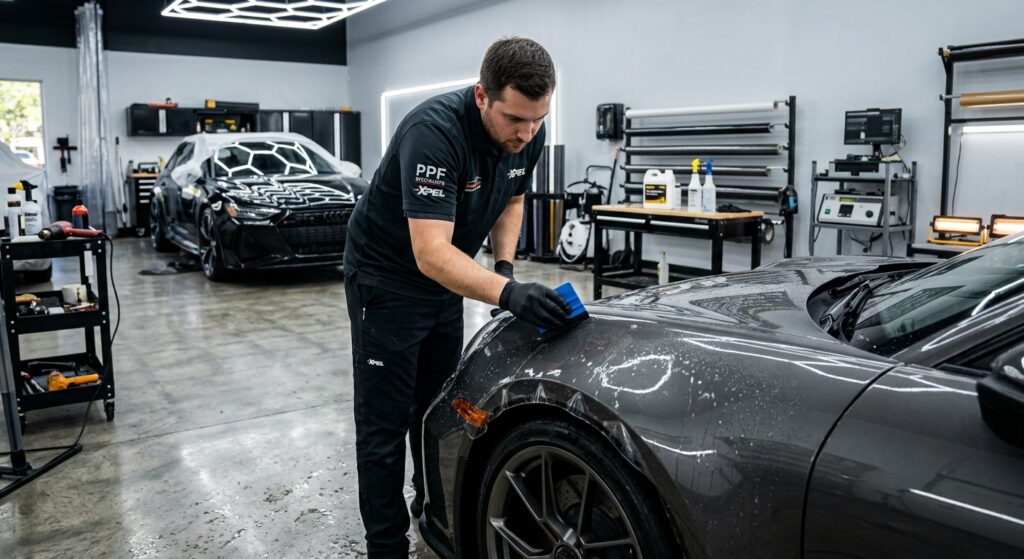
Paint protection film, sometimes called PPF or a clear bra, is a thin urethane layer applied directly to your car’s painted surfaces. It shields your paint from rock chips, scratches, and UV damage, and most modern film includes self-healing technology that lets light scratches disappear with heat.
PPF goes on after paint correction, which removes existing swirl marks and imperfections so the film bonds to a clean, smooth surface. In Colorado, where gravel, hail, and magnesium chloride road treatment take a toll on paint, PPF acts as a durable first line of defense.
How Much Does PPF Cost by Coverage Level?
Most PPF installations run between $600 and $8,000+, and where you land in that range comes down almost entirely to how much of your car you want covered.
| Coverage Type | Average Cost | What’s Covered |
| Partial Front | $600 – $1,200 | Partial hood, partial fenders, side mirrors |
| Full Front | $1,300 – $2,500 | Full hood, full fenders, front bumper, mirrors (headlights optional) |
| Track Package | $3,200+ | Everything in Full Front, plus rocker panels and rear wheel impact zones |
| Full Body | $4,500 – $8,000+ | Every painted panel on the vehicle |
Partial Front is the entry point. It covers the areas that take the most direct hits, the leading edge of the hood, the front bumper, and the mirrors, at the lowest price point. It’s a solid choice if you’re on a budget but still want protection where it counts most.
Full Front is our most requested package, and for good reason. It covers the entire front end, which is where the vast majority of rock chips and road debris land. It strikes the best balance between cost and coverage for daily drivers.
Track Package adds the rocker panels and rear wheel arches to full front coverage. If you’re logging serious miles on I-25 or I-70, where trucks kick up gravel at highway speed, this extra coverage protects the areas that partial and full front leave exposed.
Full Body covers every painted surface on the car. It’s the right call for high-value, luxury, or newer vehicles where you want to lock in maximum protection and preserve resale value from day one.
What Factors Affect PPF Cost?
Coverage level sets the baseline, but a few other variables move your final number up or down.
Vehicle Size and Type
A compact sedan takes less film and less labor time than a full-size truck or an SUV with complex body lines. Larger vehicles and vehicles with tight curves, like wheel arches or aggressive body kits, require more precise cutting and more installation time, which increases labor cost.
| Vehicle Type | Cost Range | Complexity | Recommended Coverage |
| Sedan | $1,300 – $4,500 | Low | Full Front |
| SUV / Truck | $1,800 – $6,000 | Medium | Full Front / Track Package |
| Luxury / Exotic / EV | $3,500 – $8,000+ | High | Full Body |
Film Type and Quality
Standard clear film costs less upfront but doesn’t offer the same clarity or longevity as premium film. Self-healing, hydrophobic film with a proper UV inhibitor topcoat costs more per square foot, but it resists yellowing longer and holds up better against Colorado’s high-altitude sun. As an XPEL-certified shop, we install film built to handle exactly these conditions, and we can walk you through which product tier fits your budget and your vehicle.
Prep Work (Paint Correction)
If your paint has existing swirl marks, light scratches, or contamination, it needs correction before film goes on. Skipping this step traps imperfections under the film permanently. Paint correction typically adds to your total, but it’s a one-time cost that protects the investment you’re about to make in the film itself.
Installer Skill and Labor
An experienced, certified installer costs more per hour, but that’s where the value actually shows up: tight, nearly invisible edges, correct panel alignment, and a warranty that actually means something. Cutting corners on labor is the fastest way to end up with lifted edges and trapped debris within a year.
PPF Cost by Vehicle Type
Bigger vehicles and more complex body panels mean more material and more labor time, which is why cost climbs as vehicle size and complexity increase. Use the table above as a starting point, and keep in mind that custom body kits, oversized wheel arches, or wraps already on the vehicle can shift these numbers.
PPF vs. Ceramic Coating vs. Vinyl Wrap
These three services get lumped together often, but they solve different problems.
| Feature | PPF | Ceramic Coating | Vinyl Wrap |
| Protection Level | High | Medium | Low |
| Scratch Resistance | Yes, self-healing | Limited | No |
| Lifespan | 5–10 years | 2–5 years | 3–5 years |
| Cost | Higher | Moderate | Moderate |
PPF is physical armor. It absorbs impacts from rocks and debris that would otherwise chip your clear coat.
Ceramic coating doesn’t stop chips, but it adds gloss, makes the surface easier to clean, and repels water and grime.
Vinyl wrap changes your car’s appearance and offers minimal protection against impact damage. Most of our clients pair PPF on high-impact zones with ceramic coating over the rest of the vehicle for the best of both.
Is PPF Worth It?
Yes, and the math backs it up. Installation runs $600 to $8,000+ depending on coverage, but repainting a single damaged panel can cost $500 to $3,000 out of pocket. PPF typically lasts 5 to 10 years, which means it’s doing its job well past the point where you’d have otherwise paid for touch-up paint or a full repaint.
PPF also helps preserve resale value, since a car with intact factory paint and no chip damage simply shows better at trade-in or private sale. On top of that, PPF cuts down how often you need paint correction or aggressive detailing, since the film is absorbing the damage your clear coat would otherwise take.
How Long Does PPF Last?
Most professionally installed PPF lasts 5 to 10 years, depending on three things:
- Film quality: Premium film with a strong UV topcoat resists yellowing and holds clarity longer than budget film.
- Climate conditions: Colorado’s intense UV exposure at elevation, combined with winter road treatment, puts more stress on film than milder climates.
- Maintenance: Regular washing with pH-neutral soap and avoiding abrasive polishes extends the life of your film significantly.
Can You Apply Ceramic Coating Over PPF?
Yes. In fact, it’s one of the most common combinations we install. Ceramic coating over PPF adds extra gloss, makes the surface easier to keep clean, and gives you an additional hydrophobic layer on top of the film’s physical protection.
Just make sure PPF goes on first: film needs to bond to bare, prepped paint, and applying ceramic coating beforehand can interfere with proper adhesion.
PPF Cost by Vehicle Model
Some vehicles come up in PPF pricing conversations more than others, either because of their popularity or their body complexity.
- Tesla Model 3 / Model Y: Full front typically runs on the higher end of the range due to the smooth, curved panels that require precise film patterns.
- Cybertruck: Its flat stainless steel panels and unique surfaces call for specialized handling. This is also where mirror finish protection comes in, a specialty service we’ve built specific expertise around.
- Trucks and SUVs (Tacoma, 4Runner, F-150, etc.): Larger surface area pushes these toward the middle-to-higher end of the full front and track package ranges.
If you’re weighing coverage options for a specific make and model, we’re happy to give you an exact quote instead of a range.
Additional Costs to Consider
- Maintenance: PPF needs regular washing and occasional film-safe sealant to keep the topcoat performing. Skipping maintenance shortens its effective lifespan.
- Bundled add-ons: Many clients pair PPF with ceramic coating or window tint in the same visit, which can reduce total labor time compared to booking each service separately. Check Colorado’s window tint laws before adding tint to your build.
- Removal and replacement: When film reaches the end of its life, removal and reinstallation cost less than the original install since no paint correction is typically needed, unless damage occurred underneath the film.
How to Choose the Right PPF Installer
Not all installations are created equal, and a bad install can cost you more in the long run than a good one costs upfront. Look for:
- Certifications: An XPEL-certified installer has been trained on proper technique and film handling.
- Portfolio: Ask to see real work, not just manufacturer marketing photos.
- Reviews: Look for specific mentions of edge quality and long-term durability, not just general satisfaction.
A skilled installer means tighter edges, better alignment around body lines, and a film that still looks great five years from now.
When PPF Might Not Be Worth It
We’d rather be straight with you than oversell a service. PPF might not make sense if:
- You plan to sell or trade the vehicle within a year or two and won’t recoup the cost.
- Your car stays garaged most of the time and rarely sees highway miles or gravel roads.
- You’re on a tight budget and ceramic coating alone would meet your priorities for shine and easier washing.
If any of those sound like you, we’ll tell you that directly during your consultation instead of pushing a package you don’t need.
PPF Cost FAQs
Does PPF turn yellow over time?
High-quality film with a proper UV topcoat resists yellowing for years. Budget film without that protection is more likely to discolor, especially at Colorado’s elevation.
How long does a professional installation take?
Partial front installs typically take 4 to 8 hours. Full body installations can take 1 to 3 days depending on the vehicle.
Can I wash my car normally with PPF installed?
Yes. Use pH-neutral soap and avoid abrasive polishes or harsh chemicals, which can wear down the film’s topcoat over time.
Are DIY PPF kits worth trying to save money?
DIY kits lower upfront cost but carry real risk. Improper installation leads to bubbling, lifted edges, and trapped debris, and most DIY kits don’t come with a professional warranty.
Is PPF noticeable once it’s installed?
No. High-quality film installed correctly is nearly invisible, especially at the edges where a skilled installer wraps the film rather than cutting it flush.
Next Steps for PPF Cost in Colorado
The short version: PPF pricing depends on how much of your car you cover, what film you choose, and what shape your paint is in before installation, and the investment typically pays for itself by preventing far more expensive repairs down the road.
To get an exact number, give us a call. Our PPF experts can walk through your options and get a more accurate estimate.
At Man Cave Detail, we’re an XPEL-certified PPF shop right here in Westminster, and we’ve been protecting Front Range vehicles from gravel, hail, and high-altitude UV since 2011. Get your personalized PPF quote and see exactly what coverage makes sense for your vehicle and your driving habits.