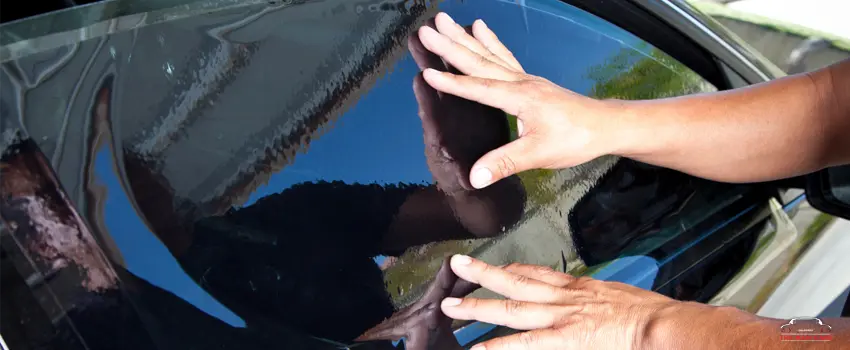

Every winter, Colorado dumps over 200,000 tons of road salt and de-icing chemicals across highways and mountain passes. If you’ve ever driven I-70 through the Eisenhower Tunnel after a snowstorm, you’ve seen (and felt) the result of that gritty, brownish slush coating every inch of your vehicle. Salt isn’t just dirty. It’s actively eating your car.
Road salt accelerates rust and corrosion at an alarming rate, attacking your paint, undercarriage, brake lines, and suspension components. For Colorado drivers who regularly tackle mountain passes, commute through Front Range snow, or park outside during winter, the damage compounds with every trip.
The good news? With the right approach, you can protect your car from road salt and avoid costly repairs down the road. This guide covers practical DIY steps you can take today, plus professional protection options that deliver long-term peace of mind for winter car protection.
Why Colorado’s Winter Roads Are Especially Harsh on Vehicles
Colorado presents a unique challenge for vehicle protection that goes beyond what drivers in other states experience.
The Salt and Mag Chloride Cocktail
CDOT uses a combination of rock salt (sodium chloride) and a liquid magnesium chloride solution on Colorado roads. While magnesium chloride is effective at lower temperatures, corrosion experts warn it may be harder on vehicles. ‘Magnesium chloride is much more corrosive than sodium chloride, the rock salt,’ says Bob Baboian, a fellow at the National Association of Corrosion Engineers.
Freeze-Thaw Cycles Accelerate Damage
Denver and the Front Range experience dramatic temperature swings, sometimes 40+ degrees in a single day. When salt water seeps into your paint’s microscratches or into body panel seams, these freeze-thaw cycles expand and contract the moisture, physically forcing corrosion deeper into the metal. Mountain communities like Vail, Breckenridge, and Silverthorne see even more extreme cycling.
Altitude and UV Exposure
Colorado’s high altitude means stronger UV radiation year-round. While you’re focused on salt during winter, that UV is simultaneously degrading your clear coat, making it more vulnerable to chemical attack. The combination creates a one-two punch that’s particularly hard on automotive finishes.
Mountain Driving Multiplies Exposure
If your weekends include skiing at Loveland, hiking near Buena Vista, or visiting family in Grand Junction, you’re logging serious miles on treated mountain highways. I-70 through the mountains receives heavy treatment all winter, and Loveland Pass, Vail Pass, and the stretch through Glenwood Canyon are notorious for salt accumulation. That’s not occasional exposure, it’s a sustained chemical assault on your vehicle.
How Road Salt Damages Your Vehicle
Understanding exactly what salt does helps explain why protection matters.
Paint and Clear Coat Degradation
Salt doesn’t just sit on your paint; it actively draws moisture and creates an electrochemical reaction with your vehicle’s metal body. This process eats through clear coat protection first, then attacks the base paint layer. You’ll notice the damage starting as dull spots, small bubbles, or areas where the paint feels rough to the touch.
Undercarriage Corrosion
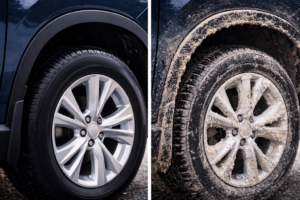
Your vehicle’s undercarriage takes the worst beating. Brake lines, fuel lines, suspension components, and frame rails are all exposed to direct salt spray while you drive. Unlike body panels, these components often lack the same protective coatings, and their failure is far more dangerous than cosmetic damage.
Wheel and Brake System Attack
Salt accumulates heavily in wheel wells and on brake components. Beyond cosmetic damage to your wheels, salt accelerates brake rotor rust and can affect the slide pins on your brake calipers. If you’ve ever noticed your brakes grinding after your car sat for a few days in winter, salt-accelerated rotor rust is likely the culprit.
Electrical and Rubber Component Deterioration
Salt spray reaches wiring harnesses, connectors, and rubber seals throughout your vehicle. Corroded electrical connections cause intermittent problems that are maddening to diagnose, while degraded seals lead to water intrusion and interior moisture issues.
How to Protect Your Car from Road Salt: DIY Steps
You don’t need professional help to significantly reduce salt damage. These practical steps to protect your car from road salt can make a real difference starting today.
Wash Your Car More Frequently (But Strategically)
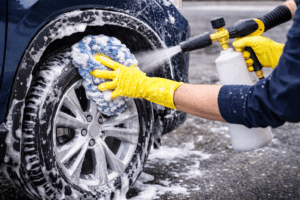
The single most effective DIY protection is simply removing salt before it has time to cause damage. During active winter months, aim to wash your vehicle every 1-2 weeks, or immediately after any primary mountain drive.
Key washing tips:
- Wash when temperatures are above 35°F to prevent immediate re-freezing
- Focus on the undercarriage. Most automatic car washes offer an underbody spray option. Use it every time.
- Hand-wash wheel wells thoroughly, as automatic washes often miss these areas.
- Don’t skip washing just because your car “looks clean.” Salt damage to the clear coat can occur even when the surface appears fine.
- Dry your door jambs and trunk seal areas to prevent ice formation.
Apply a Quality Wax or Spray Sealant
A layer of wax creates a sacrificial barrier between road salt and your paint. It won’t completely stop damage, but it buys you time between washes and makes cleaning easier.
For DIY application, spray sealants are the most practical winter option—they’re easier to apply in cold weather than traditional paste wax. Apply a fresh coat at the start of winter and refresh it monthly if possible. Pay extra attention to lower body panels, rocker panels, and the front bumper area, where salt spray concentrates.
Protect Your Undercarriage
Several DIY-friendly undercoating products can add a protective layer to your vehicle’s underbody. Rubberized undercoating sprays are available at any auto parts store and can be applied with basic equipment. While not as durable as professional treatments, they provide meaningful protection when applied to clean, dry surfaces before winter hits.
Address Paint Chips Immediately
Every rock chip is an entry point for corrosion. Salt water seeping under your paint through a small chip can cause rust bubbles that spread far beyond the original damage. Touch-up paint isn’t glamorous, but applying it to fresh chips prevents problems from compounding.
Protect Your Wheels
Apply a wheel-specific sealant or ceramic spray to create a barrier against brake dust and salt. This makes cleaning easier and reduces the chemical attack on your wheel finish. For alloy wheels especially, this small step prevents the pitting and staining that accumulates over winter.
Don’t Forget Interior Protection
Salt gets tracked into your vehicle on shoes and boots. All-weather rubber floor mats are essential for Colorado winters; they contain messes and protect your carpet from salt stains that can become permanent if left untreated. Vacuum and wipe down mats regularly to remove salt residue.
Winter Car Protection in Colorado Drivers Trust: Professional Options
While DIY steps help significantly, professional winter car protection provides Colorado drivers with comprehensive, longer-lasting protection, especially valuable for newer vehicles, luxury cars, or anyone who wants to maximize resale value.
Paint Protection Film (PPF)
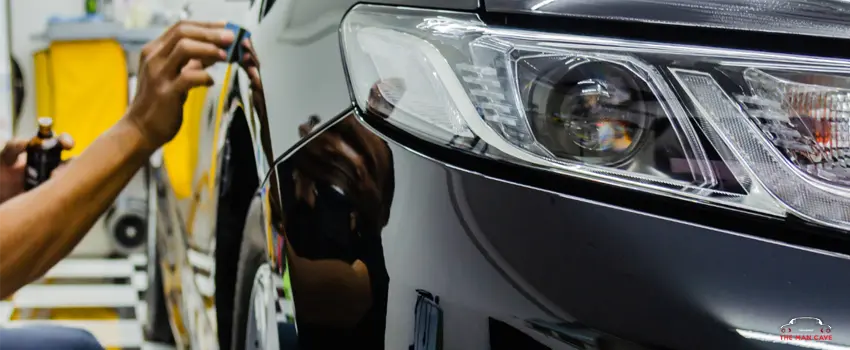
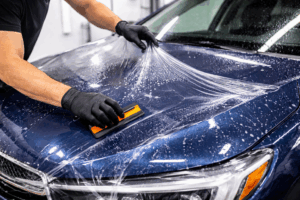
Paint protection film is the gold standard for protecting paint. This clear, self-healing urethane film creates an actual barrier between road salt, debris, and your paint. Unlike wax or sealants that eventually wash away, quality PPF lasts 7-10 years with proper care.
Why PPF matters for Colorado winter driving:
- A physical barrier prevents salt from ever touching your paint
- Self-healing properties mean light scratches from road debris disappear with heat
- Protects against rock chips from sand and gravel used on mountain roads
- Maintains resale value by preserving factory paint condition
- Full front-end coverage addresses the highest-impact areas
For Colorado drivers, PPF coverage on the hood, fenders, bumper, mirrors, and rocker panels addresses the areas that take the most winter abuse. A full hood wrap (rather than partial coverage) is particularly worthwhile given Colorado’s combination of highway driving and gravel road exposure.
Man Cave Colorado is an authorized XPEL installer, using premium film backed by a comprehensive warranty. Learn more about our Paint Protection Film services to see coverage options for your vehicle
Ceramic Coating
Professional ceramic coatings bond chemically to your paint, creating a hydrophobic surface that repels water, salt spray, and contaminants. While ceramic coating doesn’t provide the physical impact protection of PPF, it delivers several key winter benefits:
- Salt and grime wash off more easily, reducing contact time
- Hydrophobic properties mean water beads and sheets off quickly
- Chemical resistance protects against road treatment compounds
- Coating lasts 2-5 years, depending on the product and maintenance
- Dramatically reduces washing effort and time
Many Colorado vehicle owners combine PPF on high-impact areas with ceramic coating across the entire vehicle. This approach provides physical protection where it’s needed most while ensuring easy cleaning and chemical resistance everywhere else.
Professional Undercoating
Professional undercoating treatments go far beyond DIY spray products. These services include thorough cleaning and preparation, followed by application of durable protective compounds to your entire undercarriage. For vehicles that will see years of Colorado winter driving, professional undercoating protects expensive, difficult-to-replace components from corrosion once it takes hold.
Seasonal Protection Timeline: A Colorado Winter Car
Protection Checklist
October – Early November (Pre-Winter Preparation)
- Thorough wash and detail, including undercarriage
- Apply fresh wax/sealant or schedule a ceramic coating application
- Inspect for paint chips and address with touch-up paint
- Consider PPF installation before winter exposure begins
- Switch to all-weather floor mats if you haven’t already
November – March (Active Winter Protection)
- Wash vehicle every 1-2 weeks minimum
- Wash within 48 hours of any mountain driving
- Always use undercarriage spray at car washes
- Rinse wheel wells during every wash
- Dry door jambs and seals to prevent freezing
March – April (Post-Winter Recovery)
- Professional detail with clay bar treatment to remove embedded contaminants
- Thorough undercarriage cleaning and inspection
- Address any new paint damage before rust develops
- Reapply sealant protection for spring/summer UV exposure
Protecting Your Investment: The Real Cost of Neglect
It’s easy to put off protection when damage happens gradually. But consider the actual costs of salt damage over time:
- Paint correction and respray for salt-damaged panels: $500-2,000+ per panel
- Rust repair on body panels: $500-1,500+, depending on severity
- Brake line replacement due to corrosion: $200-500+
- Suspension component replacement: $300-1,000+ per corner
- Diminished resale value: 10-20% reduction for visible corrosion damage
Compare these to prevention costs:
- Professional detail with sealant: $150-300
- Ceramic coating: $800-2,000 (lasts years)
- Paint protection film: $1,500-6,000 (lasts 7-10 years)
The math is simple: prevention costs a fraction of repair, and protection maintains your vehicle’s value rather than letting it erode with every winter.
Winter Car Protection FAQs
How often should I wash my car in winter in Colorado?
Wash your car every 1-2 weeks during Colorado’s winter months, or immediately within 48 hours after any mountain drive on treated highways like I-70. The key is removing road salt before it has time to cause corrosion damage—salt begins attacking your paint and undercarriage within days of exposure.
For Colorado drivers who frequently travel mountain passes or commute through heavy snow zones, weekly washing is ideal. Always wash when temperatures are above 35°F to prevent water from freezing on your vehicle, and prioritize undercarriage spray with every wash since your underbody takes the worst salt exposure.
If your car looks clean but you’ve driven on salted roads, wash it anyway—invisible salt residue causes damage long before you can see it.
Does wax really protect against road salt?
Yes, wax provides meaningful protection against road salt, but it’s not a permanent solution. A quality wax or spray sealant creates a sacrificial barrier between corrosive road chemicals and your paint’s clear coat, buying you time between washes and making salt removal easier during cleaning.
However, wax washes away over time—especially with frequent winter washing—so you’ll need to reapply monthly during Colorado’s winter season for continuous protection. Wax works best as part of a comprehensive strategy that includes regular washing and addressing paint chips immediately.
For longer-lasting protection against Colorado’s harsh winter conditions (magnesium chloride brine, freeze-thaw cycles, and mountain driving exposure), professional ceramic coating or paint protection film provides superior durability—ceramic coatings last 2-5 years while PPF lasts 7-10 years.
Is paint protection film worth it for winter driving?
Paint protection film is absolutely worth it for Colorado winter driving, especially if you regularly tackle mountain passes or want to maintain your vehicle’s resale value. Unlike wax or sealants that wash away, PPF provides a physical barrier that lasts 7-10 years with proper care.
For Colorado drivers, PPF delivers three critical winter benefits: it completely prevents road salt and magnesium chloride from touching your paint, protects against rock chips from sand and gravel used on mountain roads, and features self-healing properties that repair light scratches from road debris with heat exposure.
The investment math is compelling: full front-end PPF costs $1,500-$6,000 but prevents paint correction ($500-$2,000+ per panel) and preserves 10-20% more resale value by maintaining factory paint condition. If you drive I-70, Loveland Pass, or other treated highways regularly, PPF pays for itself by preventing damage rather than repairing it later.
What’s the best way to protect my car’s undercarriage?
The best undercarriage protection combines frequent washing with a protective coating. Start by using the undercarriage spray option at every car wash during winter—this removes corrosive salt from brake lines, suspension components, and frame rails before damage occurs.
For proactive protection, apply a rubberized undercoating spray (available at auto parts stores) to clean, dry surfaces before winter begins. This DIY approach provides a barrier layer that reduces salt contact with vulnerable metal components.
For vehicles that will see years of Colorado winter driving, professional undercoating delivers superior long-term protection. Professional services include thorough cleaning and preparation followed by durable protective compounds applied to your entire underbody—worth the investment to protect expensive brake lines, fuel lines, and suspension parts that are difficult and costly to replace once corrosion takes hold.
Hand-wash your wheel wells during home washing since automatic washes often miss these high-exposure areas where salt accumulates heavily.
Take Action to Protect Your Car from Road Salt Now
Whether you choose the DIY route, professional protection, or a combination of both, the key is to take action now rather than wait until damage becomes visible. By the time you notice salt damage, the corrosion process has been underway for months.
Here’s your action plan:
- Start with more frequent washing. This single habit makes the biggest immediate impact
- Apply a quality sealant or wax for an added layer of protection
- Address paint chips before they become rust spots
- Consider professional protection for long-term peace of mind
If you’re ready to explore professional options to protect your car from road salt and winter damage, Man Cave Colorado offers complimentary consultations to help you determine the right coverage for your driving habits and vehicle. As Denver’s authorized XPEL installer, we specialize in winter car protection for Colorado drivers, offering packages tailored to our state’s demanding conditions.
Contact Man Cave Colorado to schedule your consultation or learn more about Paint Protection Film to see how it can protect your vehicle through many Colorado winters to come.
Man Cave Colorado provides premium vehicle protection services to Denver and the Front Range, specializing in paint protection film, ceramic coating, and window tinting for discerning vehicle owners who demand the best.